

Communities
Stop Running Your Community Across Five Different Places
Create private or public community spaces inside Kyrios where customers, members, and clients interact in one place connected to your CRM, purchases, and workflows
When Community Conversations Happen Everywhere
Most businesses don’t plan for their community to become scattered. It just happens over time.

A customer asks a question in a Facebook group.
Another sends the same question by email.
Someone else replies to a message thread or a direct message.
Now the team is answering the same question in three different places. Announcements get posted in one platform while the discussion happens somewhere else. Some members see the update. Others miss it completely. And because the conversation lives outside your system, it never connects to the rest of your business.
You can’t easily see:
Who is actively participating
Who hasn’t engaged in weeks
Which conversations signal buying interest
Which customers might be drifting away
So the community keeps moving, but visibility disappears.
At some point, you realize something uncomfortable: “We have a community… but it isn’t actually part of the business.”
It lives in social platforms, inboxes, comment threads, and chat tools that your systems can’t see.
And when conversations are scattered like that, consistency breaks down. Responses vary. Updates get missed. Opportunities slip quietly past. The community still exists, but the business can’t really see it.
What a Community Looks Like Inside the Kyrios System
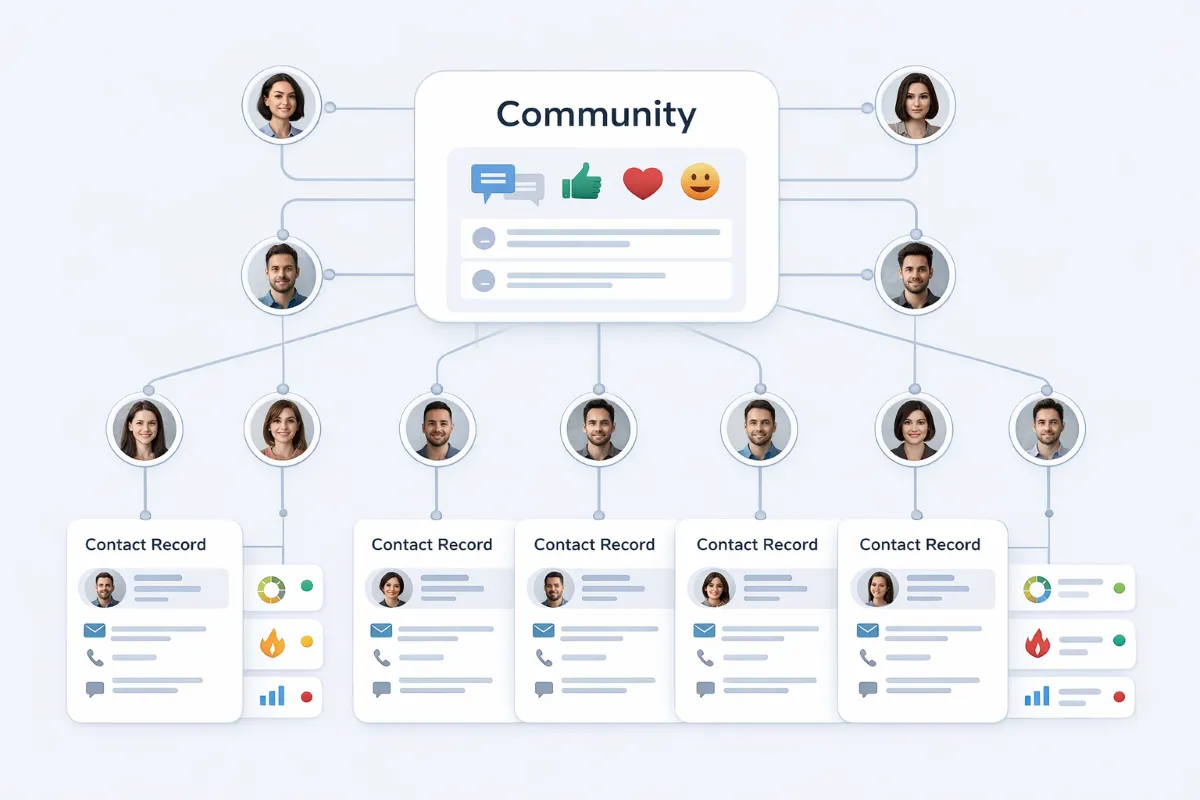
Kyrios Communities brings those conversations inside your business system. Instead of relying on external platforms, you create a structured space inside Kyrios where members log in, participate in discussions, and access updates.
Members can:
Post questions
Comment on discussions
React to posts
Interact with other members
But the important difference is what happens behind the scenes. Every member inside a Kyrios community is connected directly to their contact record. That means community activity is no longer isolated. It becomes part of the relationship data your business already tracks.
You can see:
Which customers are active
Which members participate most
Who hasn’t engaged recently
Which conversations reveal buying interest
Engagement stops being a random conversation. It becomes visible activity inside your system.
How Kyrios Communities Work
Communities are simple to set up and flexible to manage. You start by creating a community space inside Kyrios. From there you control who has access and how people participate.
You can:
Create open communities that anyone can join.
Create private communities where members receive invitations.
Restrict access based on purchases, memberships, or tags.
Once access is granted, members receive login credentials and can enter the community environment.
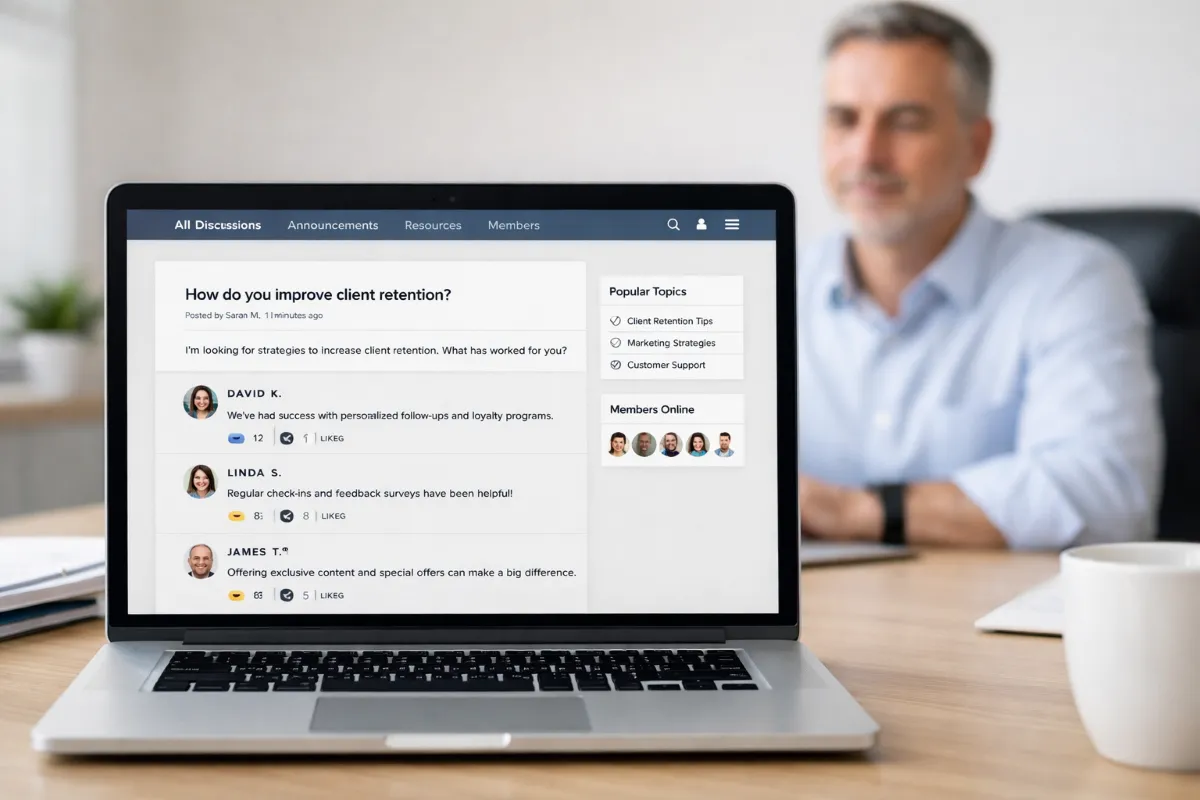
Inside the community, they can:
Read posts
Comment on discussions
Ask questions
Interact with other members
Because the community lives inside Kyrios, activity automatically connects to the customer lifecycle.
If someone joins a program, their community access can be granted automatically.
If their membership ends, access can update automatically.
No manual tracking. No approval queues to remember. The system handles it.
Why Community Management Breaks Down as You Grow

When a community is small, manual management feels manageable.
You remember who paid.
You approve members manually.
You personally answer most questions.
But growth changes the situation.
When the community grows to: 50 members → 200 members → 1,000 members. Memory stops working. The community becomes noise instead of a signal. That’s when community management stops feeling like engagement and starts feeling like work.
Now problems start appearing:
Access becomes inconsistent. Someone who canceled last month still has access.
Questions go unanswered because the team assumes someone else replied.
Important conversations get buried in comment threads.
Members stop participating because discussions feel disorganized.
And without visibility, the business loses the ability to see patterns.
How Businesses Use Communities
Communities can support many different parts of a business depending on how they are structured.
Businesses commonly use them for:
Membership and
coaching groups
Private spaces where paying members interact, ask questions, and stay engaged with the program.
Client
collaboration
Dedicated communities where clients communicate with the team during projects or ongoing services.
Courses and
training programs
Student communities are tied directly to course enrollment and learning environments.
Customer support
communities
Peer-to-peer spaces where customers share solutions, ideas, and experiences.
Brand
communities
Groups where customers and followers connect around your brand without relying on social media platforms.
Prospect
communities
Spaces where interested leads interact with your ideas and discussions before becoming customers.
In each case, the community becomes part of the business system rather than a disconnected platform.
When Engagement Lives Inside Your System, Patterns Become Visible
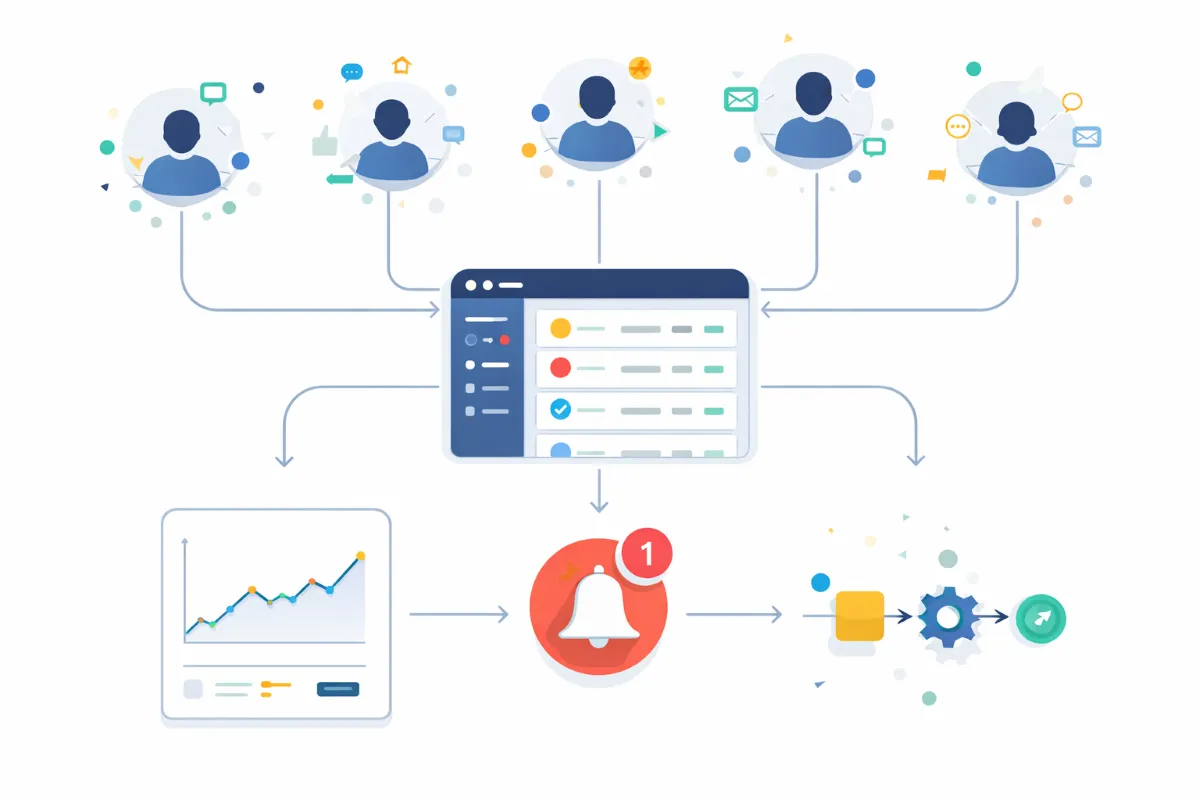
When community activity connects to your system, several things become possible:
You stop guessing who is engaged.
You can see participation patterns across your customer base.
You can trigger workflows based on behavior.
For example:
If a member hasn’t logged in for 30 days, you can trigger a re-engagement message.
If someone participates in a discussion about a product or service, the system can notify your team.
If a customer upgrades or cancels a membership, community access updates automatically.
Community engagement stops being a passive conversation. It becomes an operational signal. And those signals help the business respond at the right time.
Keep Your Community Connected to Your Business
A community can be one of the most valuable parts of a business. It’s where customers ask questions, share experiences, and build relationships with your brand. But when those conversations live across social platforms, inboxes, and chat tools, the business loses visibility.
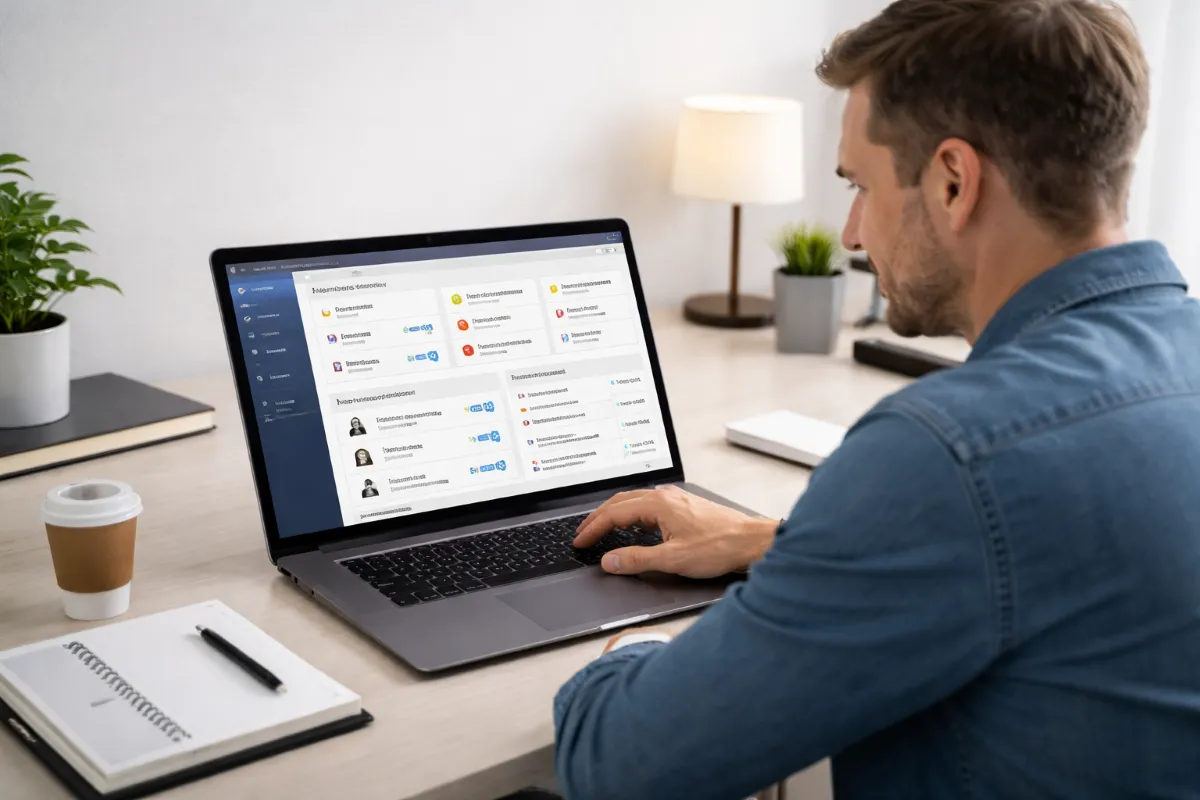
Kyrios Communities brings those interactions into the same system that manages your contacts, workflows, and customer relationships. So engagement stays visible. Access stays controlled. And the community becomes a structured part of how your business operates.
(205) 736-8422
1236 Blue Ridge Blvd,
Hoover, AL 35226




Copyright Kyrios Systems 2026 - All Rights Reserved | Privacy Policy | Terms and Conditions
(205) 736-8422
1236 Blue Ridge Blvd,
Hoover, AL 35226

Company


Copyright Kyrios Systems 2026 - All Rights Reserved | Privacy Policy | Terms and Conditions
1236 Blue Ridge Blvd, Hoover, AL 35226
Download the Kyrios app now