

Unified Inbox
Every Customer Conversation, One Place
Bring email, SMS, social messages, and chat into one shared conversation thread connected directly to the customer record.

When Conversations Are in Too Many Places
A customer emails you. Later they send a text. A few days later they reply on Facebook. Now the conversation exists in three different places. Someone on your team asks, “Did anyone reply to that message?” You check email. Then texts. Then social messages. You’re piecing together the history just to understand what was already said.
At a small scale, you can keep up. You remember who contacted you and where. You jump between apps and keep things moving.
But as conversations increase, the cracks start showing.
Messages get missed.
Context disappears.
Two team members reply differently.
A follow-up never happens because no one saw the message.
The problem isn’t effort. The communication simply isn’t structured.
Where This Shows Up in Your Business

You might experience this when:
A lead emails you and later sends a text message
A customer replies through Facebook after submitting a form
A support question comes through Instagram while the team is watching email
Two team members respond without realizing the other already did
A client conversation is scattered across multiple channels
Without a shared conversation space, the team is always trying to reconstruct what happened.

The Real Problem
Most businesses communicate across multiple channels.
Email
SMS
Social media
Website chat
Each channel works on its own. But they rarely connect to the rest of the business system. So communication becomes fragmented.
A message arrives through one platform.
A reply happens through another. Screenshots get shared internally just to show context. The CRM never reflects the full conversation. That creates real operational problems.
Response time slows because someone didn’t see the message. Two team members reply differently because they lack context. A lead goes cold because a reply sat unread. Owners often become the person holding communication together.
You check every platform. You ask the team for updates. You piece together conversations from memory. As activity increases, that approach stops working.
What the Unified Inbox Is
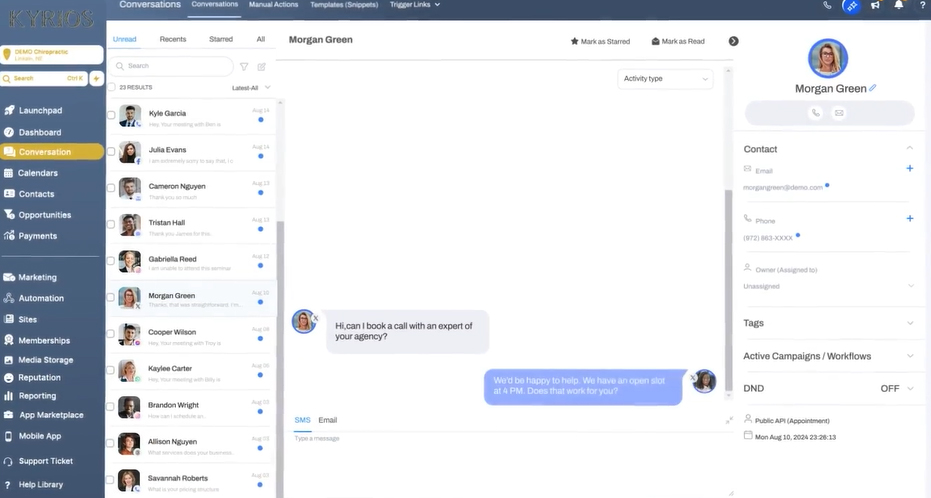
The Unified Inbox brings every customer conversation into one shared workspace. Messages from supported channels appear in a single thread tied to the contact’s CRM record.
That means when someone sends a message:
the system identifies the contact
the conversation attaches to their record
the full thread becomes visible to your team
If a customer emails, texts, Instagram DM, and sends a Facebook message, those interactions appear inside one unified conversation. Your team no longer has to search multiple platforms. The entire conversation history is already connected to the right contact.
Real-World Examples
Lead
Conversations
A new lead sends an inquiry through your website. Later they reply by text.
Instead of splitting across platforms, the entire conversation stays inside one thread tied to the contact record.
Sales can see the full history before responding.
Customer
Support
A client sends a message through Facebook asking for help. The support team responds.
If the customer later emails, the history is still visible in the same conversation thread.
No one has to start from scratch.
Team
Collaboration
A customer asks a complex question. Instead of forwarding screenshots internally, a team member can:
assign the conversation
leave internal notes
bring another team member into the thread
The entire team sees the same context.
Preventing
Duplicate Replies
Without a shared inbox, two team members may reply separately without knowing it.
With the Unified Inbox, conversations are visible and assignable.
Everyone can see who is handling the conversation.
How the Unified Inbox Works Inside Kyrios
The Unified Inbox sits directly inside the Kyrios platform and connects to the CRM.
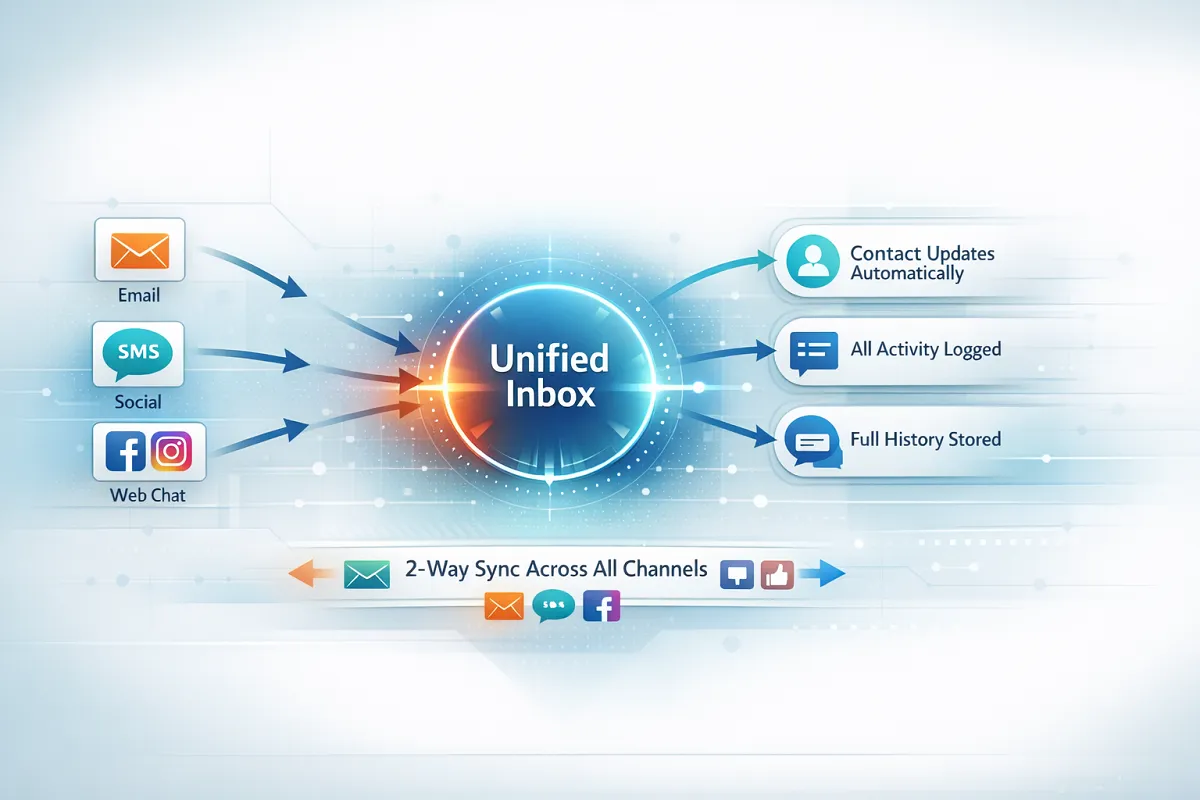
When a message arrives:
the conversation appears in the inbox
the contact record updates automatically
the activity logs on the CRM timeline
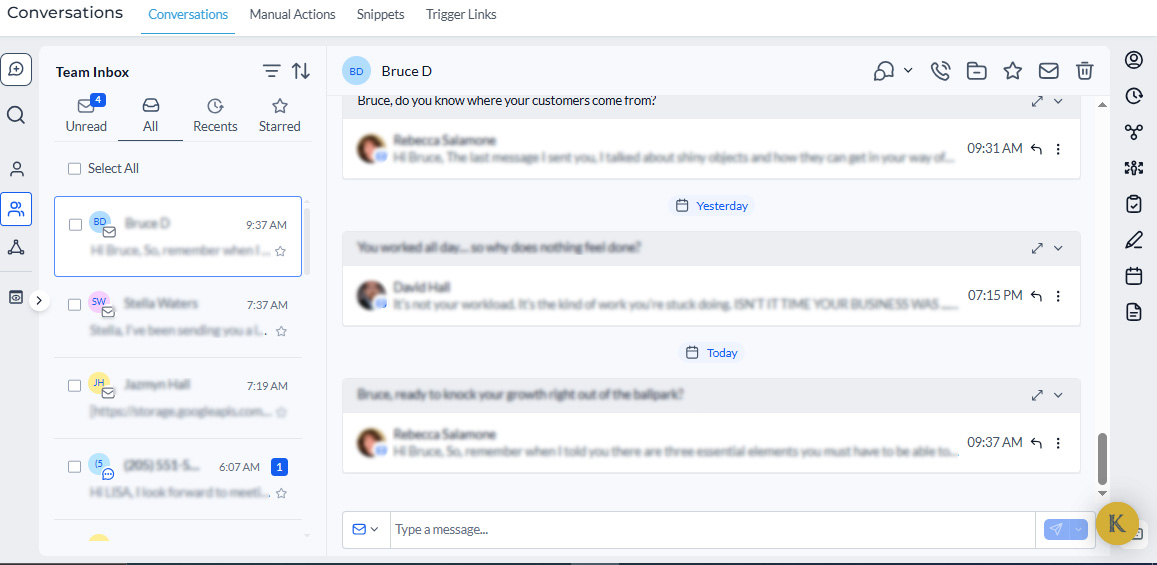
From there your team can:
reply directly from the inbox
assign conversations to team members
leave internal notes
mark conversations as open or resolved
filter messages by channel, user, or status
All messages still sync back to their original platform while remaining connected to the CRM record.
The conversation becomes part of the operational history of that contact.
How the Unified Inbox Connects to the Rest of Kyrios
Because the inbox is connected to the platform, conversations can trigger other actions. For example:
A reply from a customer or lead can trigger a workflow.
A message can update a pipeline stage.
A conversation can create a task for the team.
Activity becomes visible in reports and dashboards.
Communication is no longer separate from the system. It's part of how the business moves forward.
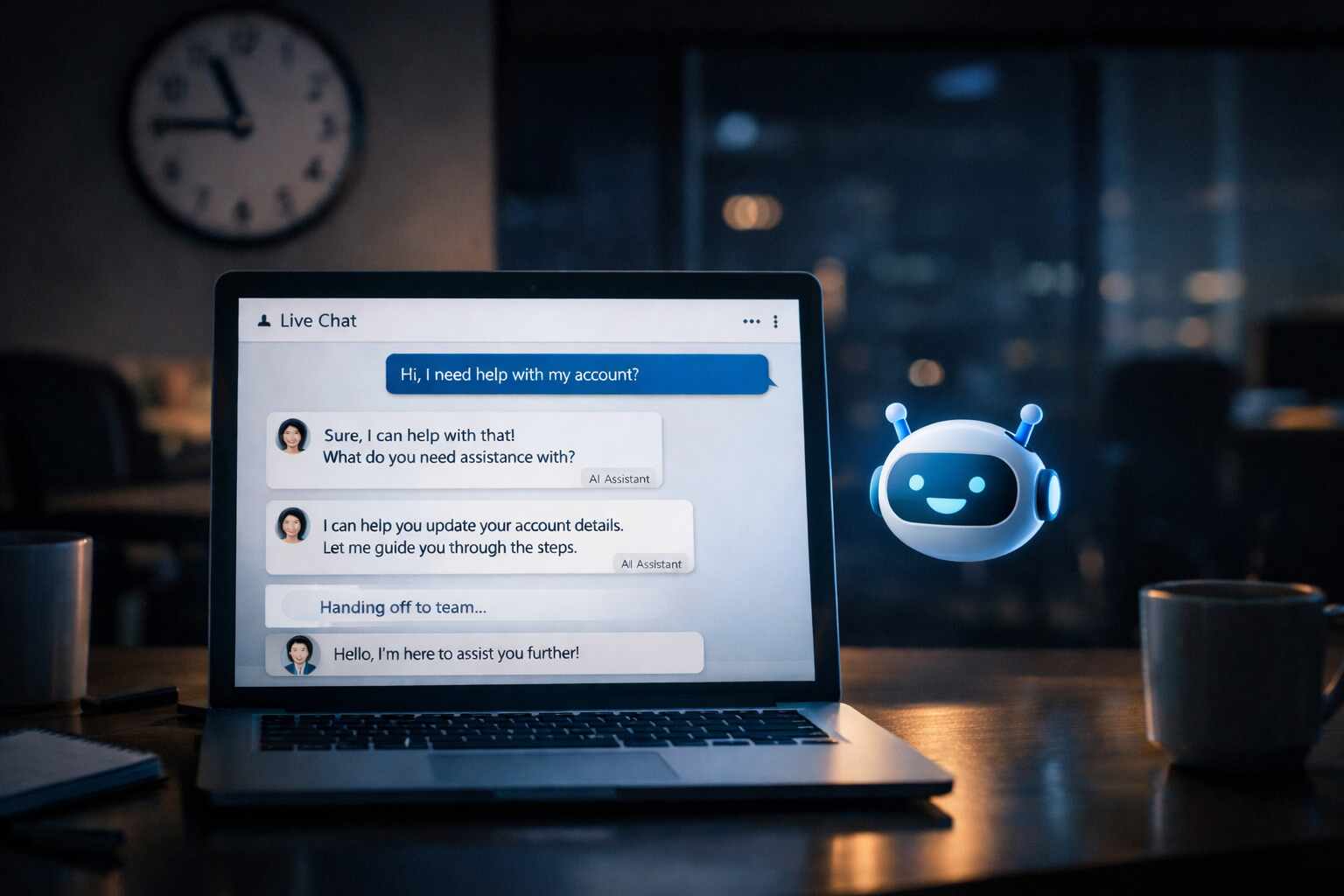
What Changes Once Conversations Are Centralized
When every conversation is in one place, several things shift:
Your team sees the full history before responding.
Response times improve because messages don’t sit unseen.
Ownership becomes clear because conversations can be assigned.
Customers receive consistent replies instead of conflicting answers.
And instead of jumping between tools trying to find context, the system shows exactly what happened. Communication becomes structured activity instead of scattered messages.
See How This Works in Kyrios
Unified Inbox Inside the Kyrios System
Kyrios is designed to replace fragmented tools with connected systems. Communication is one of the areas where fragmentation creates the most friction.
The Unified Inbox connects customer conversations directly to CRM records, workflows, and pipelines. That means communication is no longer something you manage separately. It becomes part of how the business operates.
Keep Every Conversation Moving Forward
Kyrios is designed to replace fragmented tools with connected systems. Communication is one of the areas where fragmentation creates the most friction.
The Unified Inbox connects customer conversations directly to CRM records, workflows, and pipelines. That means communication is no longer something you manage separately. It becomes part of how the business operates.
(205) 736-8422
1236 Blue Ridge Blvd,
Hoover, AL 35226




Copyright Kyrios Systems 2026 - All Rights Reserved | Privacy Policy | Terms and Conditions
1236 Blue Ridge Blvd, Hoover, AL 35226
(205) 736-8422
1236 Blue Ridge Blvd,
Hoover, AL 35226

Company


