

What the First 30 Days with Kyrios Looks Like
You're not trying to rebuild your business in 30 days. You start by replacing the one or two things causing the most problems.
That might be follow-up that depends on you remembering. It might be a to-do list that's stuck in your head. It might be conversations scattered across a bunch of different places.
The first month with Kyrios is about putting structure where things hurt the most.
The Real Question
The biggest question most people have isn’t whether Kyrios makes sense. It’s whether they have time to implement it.
Your first 30 days is built to be easy.
You're not activating everything. You start with the painful parts.
Short. Focused. Controlled.
Kyrios is an interconnected system. That means you can implement it in stages.

A Small Shift You’ll Notice Quickly
Before Kyrios
You start the day checking things.
Did anyone respond?
Did that lead get a reply?
Did someone confirm the appointment?
What still needs a follow-up?
You bounce between inboxes, messages, and notes just to figure out what happened. Nothing is broken. But everything still depends on you checking.
After the First Few Weeks
When you open the system, you don’t start by searching.
You start by seeing.
Leads are already acknowledged.
Follow-ups are already triggered.
Tasks already show who owns what.
The work didn’t disappear. It’s just not all stuck in your head.
Week 1: Foundation
Get clear on what currently depends on you.
You’re not fine-tuning reports. You’re not building advanced automations.
You’re deciding:
What automatically happens when a lead comes in?
What happens when someone replies?
What happens when a task is completed?
You’re setting simple rules your business should already be following. By the end of this week, you can see where leads sit, what tasks are open, and what step comes next.
That alone creates a bit more simplicity in business.
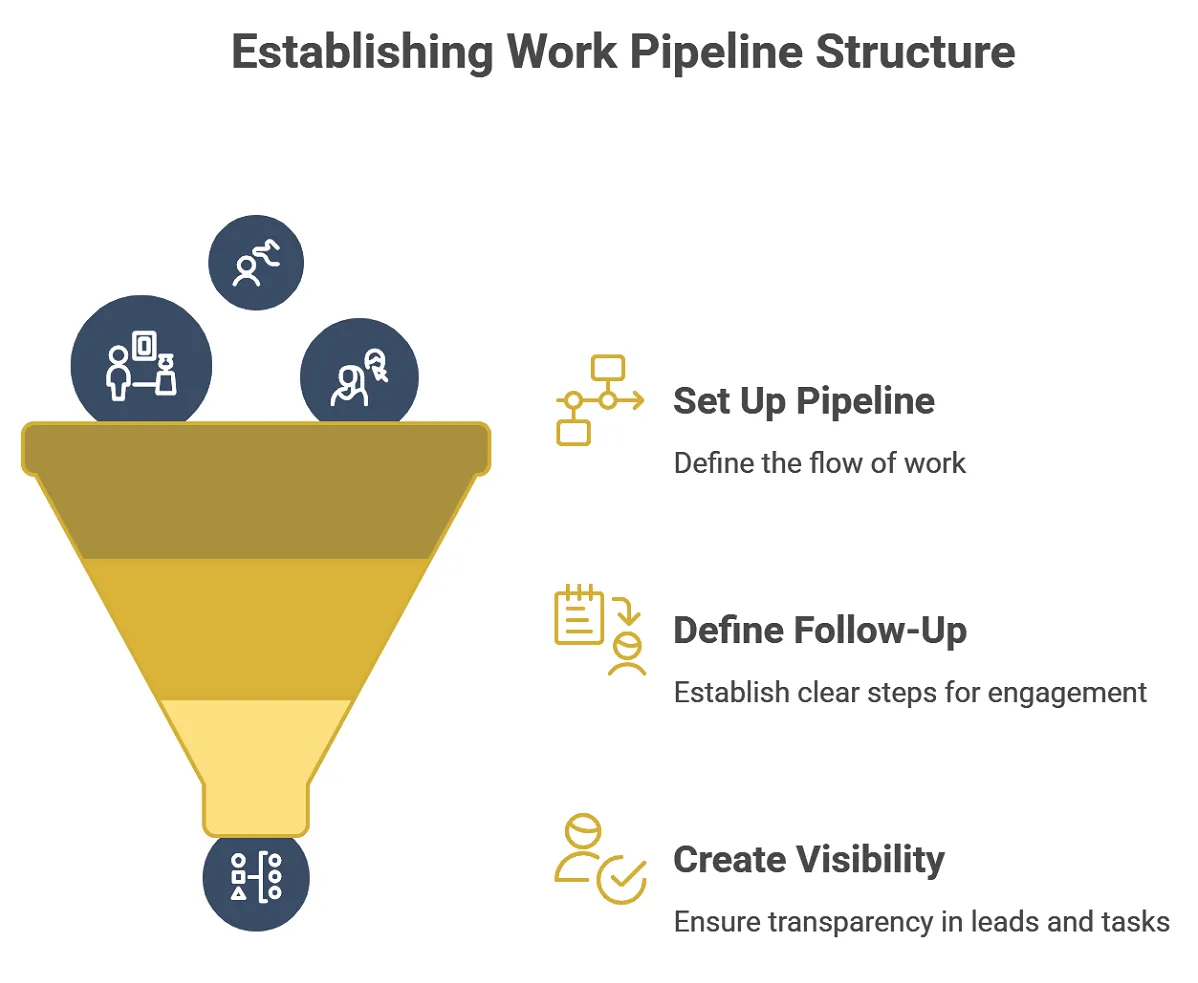
Weeks 2-3: Stabilization
Reduce the manual work that you've been dealing with.
This is where things start to get a little easier. Instead of remembering who to follow up with, the system does it. When something moves, the next step triggers automatically. That’s the core philosophy behind Kyrios:
Instead of asking, “Did anyone respond?” you can see it.
Instead of wondering what’s hanging out there, you have visibility.
The work doesn’t disappear. It just stops dominating your thoughts.
This is usually when you notice something subtle: you check less. You chase less. You get interrupted less. Because the system is handling what used to depend on you.
Week 4: Optimization
You’re no longer trying to catch up. You’re adjusting what’s already working.
Now you’re not reacting. You’re improving flow.
You:
You tighten handoffs.
You simplify steps that feel unnecessary.
You clarify reporting so you can see progress quickly.
This is not rebuilding. It’s tuning. The foundation is already carrying the load.
You’re observing and improving. That’s a different position to operate from.
What This Takes Off Your Plate
You’re not spending 30 days learning software. The first 30 days require some focused time, but not all of your time.
You'll spend time:
Clarifying how you want customers and leads handled
Reviewing your current follow-up process
Confirming who owns what
Testing a small number of automations
The difference is subtle but powerful.
You’re defining structure once so you stop fixing the same small problems every day.

What Most Owners Notice First
Within the first few weeks, you'll notice:
Fewer “Did this get done?” moments
Fewer follow-up checks
Clearer next steps
Less digging to figure out what's happening
Less replaying conversations at night
That early shift matters. Because once you feel even a small return of control, implementation stops feeling hard.
The Point of the First 30 Days
The goal isn’t perfection. It's control.
You're not worried about every feature. You're not trying to automate everything at once. You start where the pain is highest and build from there. That’s how complexity turns into simplicity. And that’s how implementation brings relief.
(205) 736-8422
1236 Blue Ridge Blvd, Hoover, AL 35226



Copyright Kyrios Systems 2025 - All Rights Reserved | Privacy Policy | Terms and Conditions