
e-Commerce
Stop Manually Handling and Updating Every Sale
Sell products or services online inside Kyrios so orders, payments, customer records, and follow-up workflows stay connected automatically.
When a Sale Happens, But Everything Else Waits

The sale happened. But everything that follows depends on someone remembering what to do next. And when orders increase, that small gap becomes a problem.
Selling online used to mean one simple thing. A customer buys something. Today the sale is only the first step. The moment the payment clears, a chain of other actions needs to happen:
A confirmation email should go out
Customer records should update
Tags or segments should apply
Your team should know what was purchased
Follow-up campaigns should begin
But for many businesses, those steps happen somewhere else.
The store processes the payment
Then someone manually updates the CRM
Someone else sends a receipt
A task gets created to handle fulfillment
Another reminder gets written down to follow up later
Where This Shows Up Across Your Business
Selling online isn’t limited to retail stores. Many businesses rely on e-commerce in different ways.
You might use online checkout for:
physical product sales
digital downloads or resources
coaching packages or service bundles
memberships or recurring subscriptions
event tickets or registrations
merchandise tied to your brand
nonprofit donations or fundraising items
Each transaction starts the relationship with the customer. But when the purchase is in a storefront tool while the customer record lives somewhere else, the business loses visibility into what happens next.
Why Online Sales Become Hard to Manage
At a small scale, manual handling feels manageable:
You receive an order notification
You update the CRM
You send the confirmation email
You assign fulfillment tasks
That process works when a handful of orders arrive each week. But as the business grows, the number of other things behind every sale increases.
You may begin to notice:
Orders appearing in the store but not in your CRM
Customer records missing product information
Follow-ups happening late because no workflow started automatically
Sales data living in one platform while marketing activity lives in another
Reporting requiring spreadsheets just to understand what actually happened
The transaction is in one system. The customer lifecycle is somewhere else. And someone has to manually connect the two.
What e-Commerce In Kyrios Is
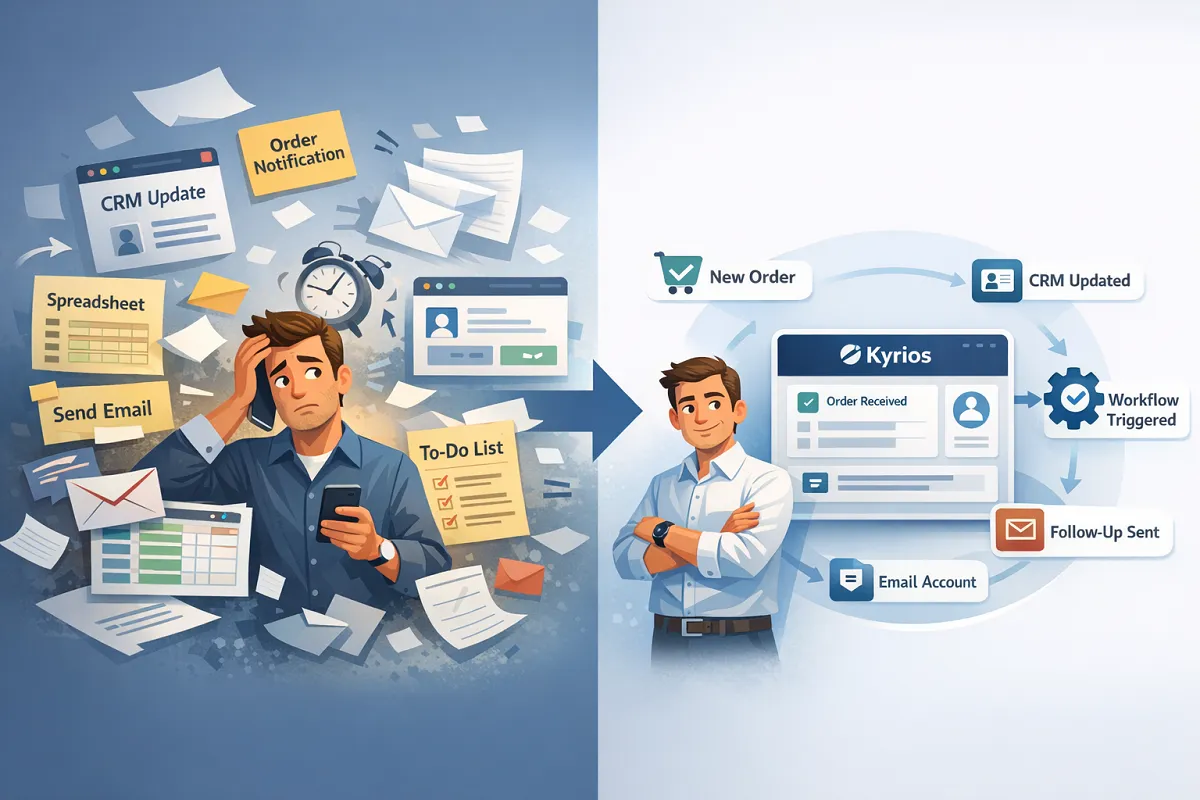
Kyrios e-Commerce connects your store directly to the rest of your business operations.
Instead of selling through a separate storefront platform, products, checkout, payments, and customer records live inside the same system that manages your contacts, workflows, and communication.
You can create products for:
physical goods
digital products
services or packages
subscriptions or recurring billing
Communicate about ongoing work
Each product includes pricing, descriptions, images, and optional variations. Customers purchase through a secure checkout connected directly to Kyrios Payments. When the transaction completes, the sale becomes part of the customer record automatically. No exporting data. No manual CRM updates. The purchase is already connected to the rest of the system.
How Businesses Use It
Businesses use e-Commerce inside Kyrios in many different ways:
Online
Businesses
A product company launches a storefront for physical merchandise and tracks orders and inventory from the same dashboard.
Marketing
Agencies
A coach sells digital programs and automatically grants course access after purchase.
Consulting
Firms
A service provider sells consulting packages and triggers onboarding tasks once payment is completed.
Events and
Festivals
An event organizer sells tickets and automatically sends confirmation messages and reminders.
Nonprofit Organizations
A nonprofit collects donations and tracks donor history inside the CRM.
In each case, the purchase becomes part of the customer journey instead of just a random transaction.
How It Works In Kyrios
Setting up an online store inside Kyrios is straightforward.
Activate the e-Commerce module inside the Website Builder
Add your products with pricing, descriptions, and images
Customize the storefront pages using the Kyrios page builder
Connect Kyrios Payments to process transactions
Publish the store and begin accepting orders
When a customer completes a purchase, Kyrios automatically records:
the order
payment details
purchased products
customer contact information
customer lifetime value information
This information is stored in the CRM and connected to the customer’s activity timeline. From there, additional things can happen automatically.
How Sales Connect to the Rest of the Platform
This is where Kyrios e-Commerce is different from traditional storefront tools.
Orders don’t stop at payment confirmation. They trigger the next steps in the system. For example, a completed purchase can:
Create or update the customer’s CRM record
Apply tags based on the product purchased
Trigger confirmation emails or text messages
Start onboarding workflows
Assign fulfillment tasks to the team
Request reviews or feedback after delivery
Add the customer to targeted follow-up campaigns
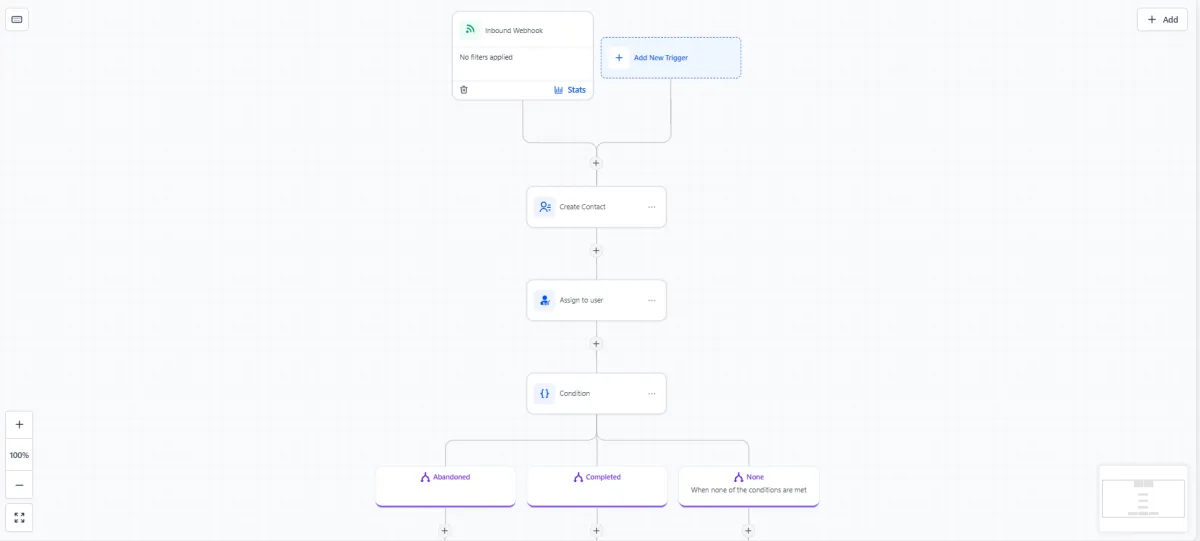
Instead of treating the sale as the end of the process, the system treats it as the beginning of the relationship.

The transaction becomes part of the flow of the business. Not some disconnected event someone has to manually manage.
What Changes When Sales Feed the System
When your online store connects directly to the rest of your business, the workflow changes:
You stop exporting order data
You stop manually updating customer records
You stop reminding yourself to follow up with new buyers
Your team can see purchase history directly inside the contact record
Marketing campaigns can target customers based on what they actually bought
Sales activity, revenue data, and customer behavior all live in the same system
Sales That Move the Customer Journey Forward
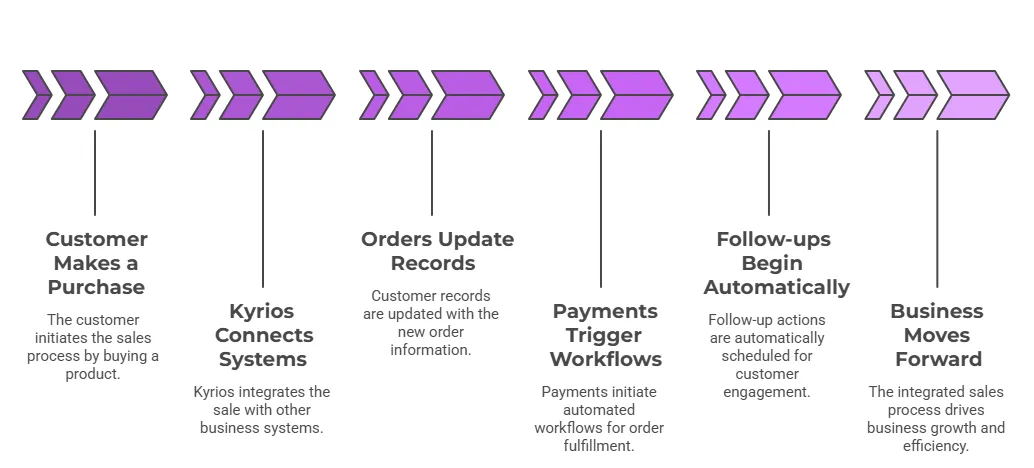
A sale is not just revenue. It is the moment when a customer relationship begins. Kyrios connects that moment to everything that follows:
Orders update customer records
Payments trigger workflows
Follow-ups begin automatically
Your store, your CRM, your marketing, and your operations all stay connected. So every sale moves the business forward instead of creating another manual task.
(205) 736-8422
1236 Blue Ridge Blvd,
Hoover, AL 35226

Company





1236 Blue Ridge Blvd, Hoover, AL 35226
Download the Kyrios app now