
You’re Not Starting From an Empty System
Most businesses begin with nothing running in the background. Yours starts with structure already in place, supporting the moments that usually get missed.
Messages don’t sit unanswered
Follow-ups don’t depend on memory
New contacts don’t get forgotten after the first interaction
Start from a position where something is already in place and ready to respond.

It’s Not One Thing. It’s Everything You’re Dealing With...
You’re keeping track of who needs a follow-up.
You’re checking if tasks actually got done.
You’re going back through messages to make sure nothing was missed.
You’re answering questions your team asks because there’s no clear next step.
A conversation comes in and sits there. A new contact gets added and nothing happens next.
Something gets handled halfway, and you’re not sure who’s supposed to finish it.
So you check. Then you check again.
And even when everything seems handled, there’s still that feeling that something might have slipped.
As your business grew, more started happening at the same time.
As your business grew, more started happening at the same time.
More conversations.
More customers.
More moving parts.
At first, it worked. You kept things moving by remembering what needed to happen and stepping in when something stalled.
But over time, that approach didn’t scale.The work kept increasing, but the structure underneath it didn’t.
So instead of the system carrying the work, the work started relying on you.
You became the one connecting everything. The one catching what slipped. The one deciding what happens next.
This isn’t about effort. It’s about how the work is structured.


What Happens When Everything Depends on You
When the work depends on someone remembering, progress becomes inconsistent.
Some things move quickly. Others sit longer than they should.
A message gets a response right away one day, and sits unanswered the next.
A follow-up happens for one customer, but gets missed for another.
A task gets completed, but the next step isn’t always clear.
Nothing feels completely broken. But it’s not consistent either. So more of the responsibility quietly shifts back to you.
You become the one checking what happened, filling the gaps, and making sure things don’t stop. That’s why even when you stay on top of things, it still depends on you to keep it moving.
What Changes When the System Handles It
What if those moments didn’t depend on someone noticing them?
What if a message didn’t wait for a reply, a follow-up didn’t rely on memory, and a task didn’t stop halfway without the next step being clear?
Instead of the work depending on people to keep it moving, the system takes over that responsibility.
The response happens.
The next step is triggered.
The work continues without waiting.
Kyrios is built to shift that responsibility away from constant human effort and into a structure that keeps things moving on its own. So the business doesn’t depend on someone to hold it together moment by moment.

How Starting Actually Works
You don’t need to rebuild everything or figure out where to begin.
The system starts by taking a few key moments that usually depend on you and putting structure around them so they keep moving without constant attention.
Starter Pack
Start with Structure Already in Place
What starts happening immediately
Your account doesn’t begin empty or waiting to be built.
The kinds of moments that usually sit, like unanswered messages, missed follow-ups, or contacts that go nowhere after the first interaction, are already supported from the start.
What you stop handling manually
You’re not checking if something was handled or trying to remember what still needs attention.
Those moments are no longer sitting in the background waiting on you to notice them.
What this isn’t trying to do
This doesn’t fully build out your system or handle every situation in your business.
It gives you a stable starting point so you’re not relying on memory from day one.
First Workflow Win
See One Important Moment Handled Automatically
What starts happening immediately
One real situation in your business is already set up to move forward automatically.
When a message comes in, a missed call happens, or a lead reaches out, the system responds and triggers the next step instead of waiting for someone to decide what happens next.
What you no longer need to watch for
You’re not checking for that moment, remembering to follow up, or wondering if it was handled.
That moment no longer depends on you to keep it moving.
What this doesn’t mean yet
This doesn’t automate your entire business or cover every situation.
It’s one focused example that shows how work can continue without constant manual attention.
First 30 Days
Move Forward Without Feeling Overwhelmed
What your first month looks like
Your first 30 days are structured so you’re not left trying to figure everything out on your own.
You’re guided through how the system works, how it supports your business, and how to expand it at a steady pace.
What pressure this removes
You don’t have to make every decision upfront or try to build everything all at once.
You’re not left guessing what to do next.
What you’re not expected to do
You’re not expected to fully configure or master everything immediately.
The goal is to start with something working, then build from there over time.
What This Starts to Change
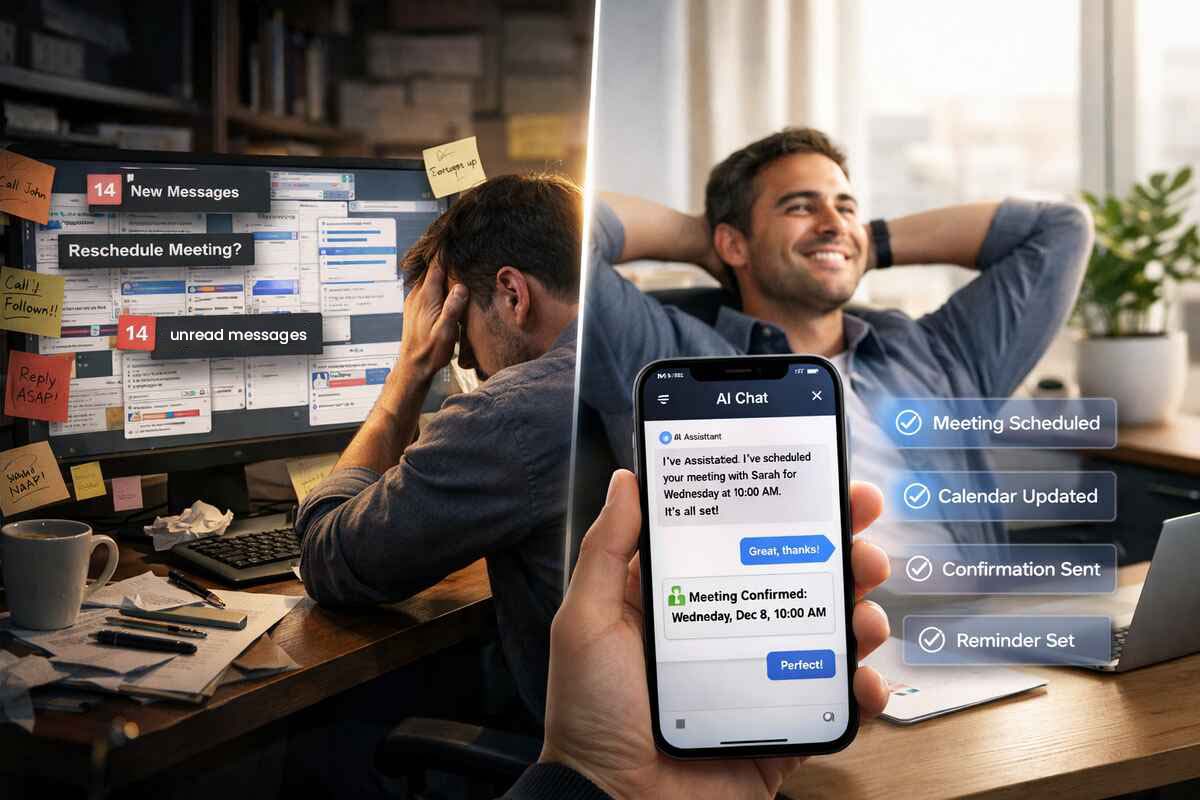
When those moments are handled consistently, your day starts to feel different. You’re not going back to check what happened.
You’re not holding follow-ups in your head or trying to keep track of what still needs attention.
Work keeps moving without needing constant input. Conversations don’t stall.
Tasks don’t stop halfway. The next step is clear without someone needing to step in and decide it.
Fewer things slipping through unnoticed
Clearer handoffs between steps and people
Less time spent checking and following up
More visibility into what’s actually moving
It’s not about doing more. It’s about the work no longer depending on you to keep it moving.
You might be thinking a few things
“This sounds like something that takes time to set up”
You might expect that you’d need to build everything before anything actually works.
But that’s not how it starts.
You’re not setting up a full system on day one. The structure is already in place, and one part of it is already running so something is handled without you needing to step in.
There’s more that can be built later, but you’re not expected to do that all at once.
“I’ve tried tools before and they didn’t stick”
It’s common to try something new and end up with more to manage instead of less.
Most tools still depend on someone using them consistently to keep things moving.
This works differently.
The goal isn’t to give you something else to manage. It’s to take moments that usually depend on you and make sure they don’t stop just because no one noticed them.
It doesn’t replace everything you’re using, but it changes how the work moves between those pieces.
“I don’t have time to learn something new right now”
When your day is already full, adding anything new can feel like more work. You’re not expected to learn everything upfront or change how you run your business all at once.
The system is introduced in a way where you can see it working first, then expand it over time. There is still a learning process, but it’s structured so it doesn’t add pressure to your day.
You’re not expected to figure everything out. You’re starting with something that already works, and building from there.
Start in a Way That Feels Manageable
You don’t need to commit to everything or have it all figured out.
The first step is simply to start with structure in place and see how it works in your business.
(205) 736-8422
1236 Blue Ridge Blvd,
Hoover, AL 35226




Copyright Kyrios Systems 2026 - All Rights Reserved | Privacy Policy | Terms and Conditions
1236 Blue Ridge Blvd, Hoover, AL 35226
Download the Kyrios app now
Copyright Kyrios Systems 2026 - All Rights Reserved
(205) 736-8422
1236 Blue Ridge Blvd,
Hoover, AL 35226

Company


Copyright Kyrios Systems 2026 - All Rights Reserved | Privacy Policy | Terms and Conditions

Amet minim mollit non deserunt ullamco est sit aliqua dolor do amet sint. Velit officia consequat duis enim velit mollit.


