Custom Objects
Track the Things That Don’t Belong in a Contact Record
Create structured records for projects, assets, subscriptions, properties, and other operational data so the details of your business stay organized and connected.
Some Things in Your Business Aren’t People

Contacts are easy to track. Conversations attach to them. Deals move through pipelines. Messages show up in timelines. But then there are the things that don’t belong in a contact record.
A project with its own deadlines.
A property with its own service history.
A subscription with renewal dates.
Equipment installed at a client location.
When those details get pushed into notes or scattered across tools, things start to break down.
Your team asks questions like:
“Where do we track this?”
“Which job are we talking about?”
“Is this the right property?”
And suddenly the system you rely on for visibility turns into a place where information gets buried.

Where This Shows Up in Your Business
You might use Custom Objects to track:
Projects for each client
Properties under management
Equipment installed at customer locations
Subscriptions and renewals
Service cases or warranties
Vehicles, devices, or assets under maintenance
These are real operational records. They deserve their own structure.
The Real Operational Problem

Most systems assume everything important revolves around a contact.
So when businesses need to track something more complex, they improvise.
They add long notes to contact records.
They create dozens of custom fields.
They build spreadsheets to track details.
They send email threads to keep history.
At first it works. But as the business grows, those workarounds collapse.
One client might have:
multiple projects
several service jobs
different locations
ongoing contracts
All of that information ends up stuffed inside a single contact timeline.
Now the team is scrolling through notes trying to figure out what belongs to which situation. The problem isn’t effort. The structure simply doesn’t exist.
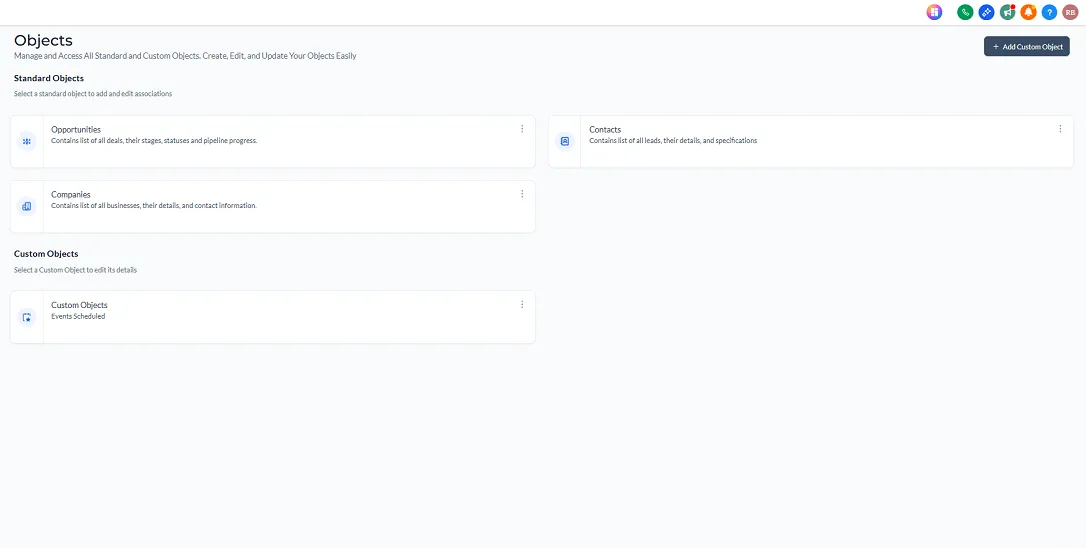
What Custom Objects Actually Are
Custom Objects give your business a way to track things that aren’t people.
Inside Kyrios, you can create structured records for the other parts of your operation.
For example:
A Project
A Property
A Subscription
A Piece of Equipment
Each object becomes its own record with its own fields and activity history. Instead of forcing everything into a contact record, Kyrios lets you organize the real pieces of your business properly. Contacts represent people. Custom Objects represent the things connected to those people.
Real-World Examples
Service
Business
A customer may have multiple jobs.
Each job needs its own:
status
technician
deadlines
notes
service history
Custom Objects allow each job to exist as its own structured record instead of disappearing inside the contact timeline.
Property or Asset
Management
A single client might own several locations.
Each property has:
documents
inspections
service history
follow-ups
Custom Objects create a separate record for every property while keeping them connected to the owner.
Subscription
Businesses
Customers may have multiple plans or agreements.
Each subscription needs:
start dates
renewal dates
plan levels
billing history
Custom Objects allow every subscription to exist as its own trackable record.
Equipment or
Installed Assets
Many businesses install equipment for customers.
Each asset may have:
warranty dates
maintenance schedules
service history
model details
Custom Objects allow each piece of equipment to be tracked individually while still tied to the customer.
How Custom Objects Work Inside Kyrios
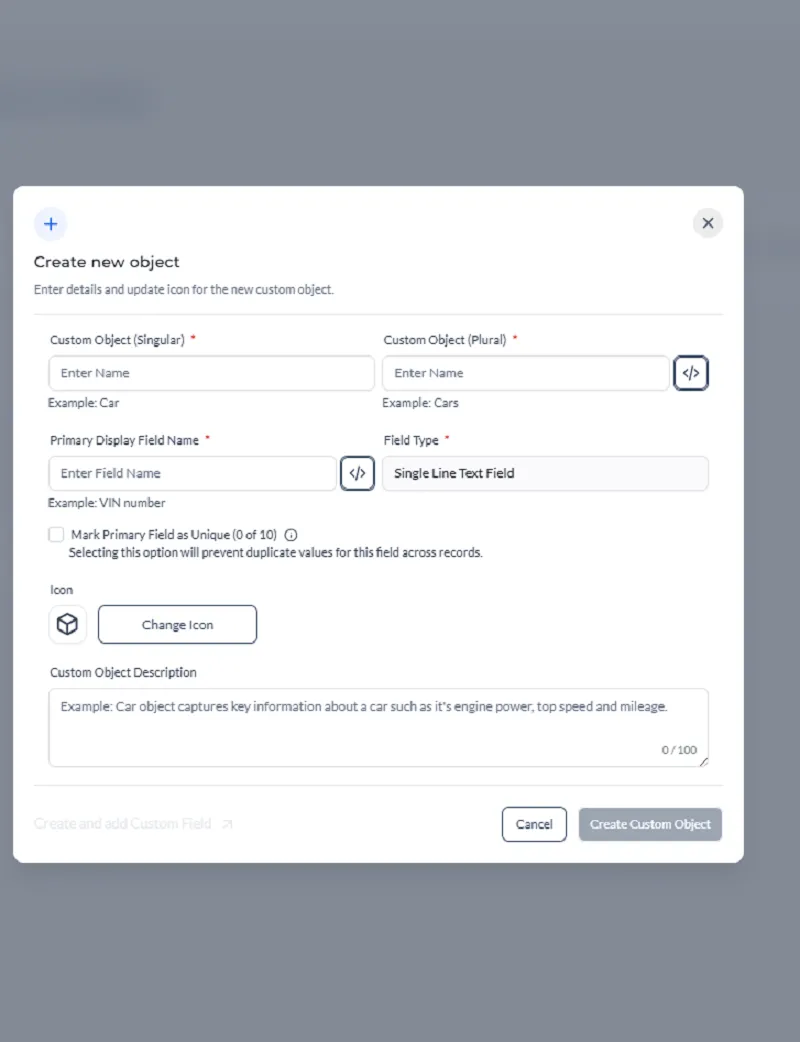
When you create a Custom Object, you define a new type of record inside the system.
For example:
Project
Fields might include:
Project Name
Budget
Deadline
Status
Assigned User
Each project becomes its own record.
That record can:
store its own fields
hold notes and activity history
connect to contacts or companies
appear in lists and reports
Instead of cluttering the contact timeline, the information stays organized inside the object where it belongs.
How Custom Objects Connect to the Rest of Kyrios
Custom Objects are not isolated records. They connect directly to the rest of the platform.
For example:
A status change can trigger workflows.
A deadline can create tasks.
Object fields can personalize emails or SMS messages.
Object stages can appear inside pipelines.
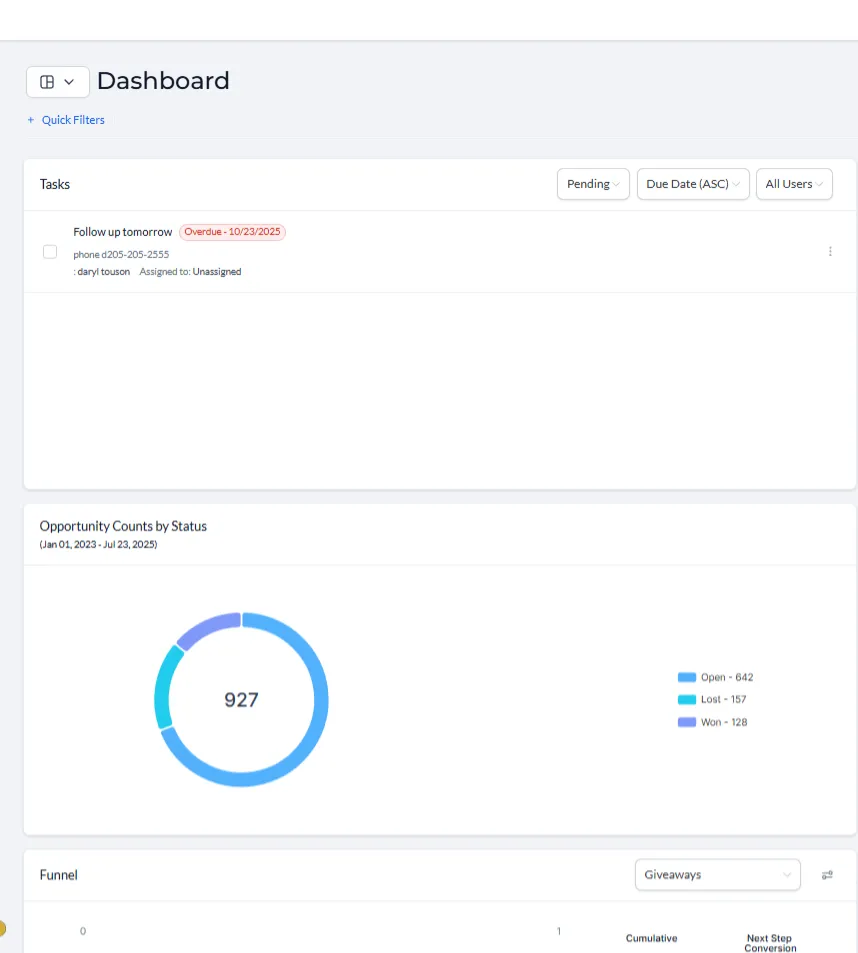
Dashboards can generate reports based on object data.
Because everything lives inside the same system, the information flows naturally from one part of the business to another.
What Changes Once Custom Objects Are in Place
Once your business has structure for the things it actually manages, several things shift. Information stops getting buried in notes.
Your team can quickly answer:
“What’s the status of this project?”
“When does this subscription renew?”
“Which equipment is due for service?”
Ownership becomes clear. Reporting becomes possible. And instead of digging through timelines or spreadsheets, the system simply shows you what’s happening.
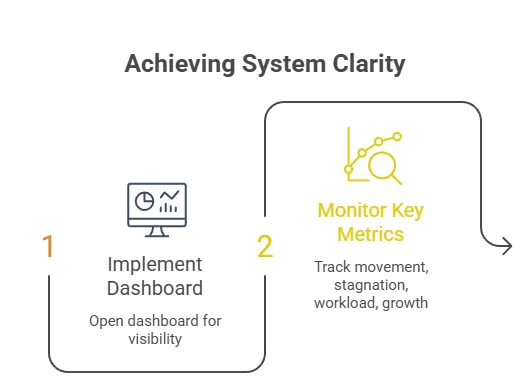
Custom Objects Inside the Kyrios System
Kyrios was designed to replace memory-driven operations with connected systems. Custom Objects extend that structure beyond contacts and deals.
They allow your system to reflect how your business actually operates. Instead of bending your processes to match the software, the system adapts to your real-world structure.
That flexibility is what allows Kyrios to support businesses across many industries without losing clarity or control.
Ready to See How Your Business Could Be Structured?
(205) 736-8422
1236 Blue Ridge Blvd,
Hoover, AL 35226



Copyright Kyrios Systems 2026 - All Rights Reserved | Privacy Policy | Terms and Conditions

1236 Blue Ridge Blvd, Hoover, AL 35226
Download the Kyrios app now
(205) 736-8422
1236 Blue Ridge Blvd,
Hoover, AL 35226

Company


