

Chaos Isn’t a Character Flaw. It’s a System Flaw
Why “You Just Need Better Discipline” Feels True… But Doesn’t Fix Anything
If your business feels chaotic, your first instinct is to blame yourself.
You think you are disorganized. You think you lack discipline. You think you just need to “work smarter.” That assumption feels true.
You look at your day and see things half-finished, messages waiting, and tasks that should have been done already. It feels like a focus problem. It feels like a time problem.
So you try to fix it. You try to be more organized. You try to stay on top of everything. You push yourself to keep up.
Sometimes it works for a short time.
But then the same pattern comes back.
Things start slipping again.
The list gets longer.
You feel behind, even when you’re working all day.
That’s the part that doesn’t make sense.
Because you’re not avoiding work, you’re doing it.
Here’s how that shows up in your daily work:
You keep tasks in your head because there is no single place tracking everything
You repeat the same steps because nothing is set up to move forward on its own
You constantly check in because nothing feels fully handled
You switch between tools that don’t fully connect with each other
You stay busy all day but still feel behind by the end of it
This creates a pressure loop that’s hard to break.
The more you try to stay on top of everything, the more everything depends on you. The more it depends on you, the harder it becomes to actually get ahead.
That’s why this doesn’t get solved with discipline. It’s not that you need to work harder.
It’s that the way the work is set up keeps pulling you back in.
What Overwhelm Actually Looks Like in a Business
Overwhelm in a business doesn’t show up as one big problem. It shows up in small, constant interruptions that never fully stop. You’re not dealing with one issue. You’re dealing with dozens of small things competing for your attention at the same time. That’s what makes it hard to explain and even harder to fix.

You start your day with a plan, but it rarely holds. Something urgent comes in. A message needs a reply. A task needs clarification. A small issue turns into something that needs your attention right now. Before you realize it, your focus is gone, and you’re moving from one thing to another without actually finishing what you started.
Here’s how that usually shows up in your daily work:
You switch between tasks constantly because something always feels more urgent
You make the same decisions over and over because nothing is clearly defined
You check multiple tools just to understand what’s going on
You jump into conversations your team already started just to keep things moving
You follow up manually because you don’t trust that it’s handled
None of these feel like “the problem” on their own. But together, they create a steady pressure that builds throughout the day. You try to focus, but something pulls you away. You try to move forward, but you keep getting dragged back into coordination, checking, and fixing.
That’s where most of your time actually goes. Not on meaningful progress, but on switching, clarifying, and stepping in. You’re not just doing your work. You’re constantly making sure everything else keeps moving.
This is what overwhelm really looks like in a business. It’s not just having too much to do. It’s being in the middle of everything. Every decision, every update, every next step somehow routes back to you. And even when you step away, your mind stays there, tracking what might be slipping.
Over time, that mental load builds. Your brain becomes the place where everything connects. And the more you carry, the harder it becomes to feel in control of any of it.
Why This Keeps Happening (Even If You Work Harder)
This keeps happening because nothing underneath your work is actually carrying it forward.
You can work harder. You can stay more focused. You can push through longer days. But if the structure underneath your business doesn’t support how work moves, the same pressure keeps coming back.

That’s why it feels like you’re always managing instead of progressing.
At the core of it, most businesses don’t have a clear system for how work flows. Tasks start, but they don’t move on their own. Decisions get made, but they’re not built into a repeatable process. So every step depends on someone remembering what to do next.
And most of the time, that someone is you.
Here’s what’s actually happening behind the scenes:
There is no defined system that moves tasks from one step to the next
Your tools exist, but they don’t fully work together
Work depends on manual follow-up instead of structured flow
There’s no clear visibility into what’s done and what’s still open
Your team relies on you to confirm, clarify, or move things forward
So even when things start moving, they don’t stay moving.
They slow down. They pause. They wait. Until you step in again. That’s why working harder doesn’t solve this.
Because the issue isn’t how much effort you’re putting in. The issue is that the business is built in a way that requires constant involvement to function.
Without a system in place, everything becomes reactive. You respond to what shows up. You fix what slips. You move things forward manually.
Over time, that turns overwhelm into something predictable. Not because your business is broken.
But because the way it’s set up makes overwhelm unavoidable.
The Hidden Cost of Running Without Systems
Running without systems doesn’t break everything at once. It slows things down quietly, in ways that are easy to miss at first. You’re still working. The business is still moving. But underneath that, small gaps start forming, and those gaps begin to stack over time.

At first, it just feels like you’re doing more than you should. You’re checking things more often. You’re stepping in more than expected. You’re staying involved longer than necessary. Nothing feels completely out of control, but nothing feels fully handled either.
Then those small gaps start turning into real impact.
A follow-up gets missed, and the lead goes cold. A task gets delayed, and it pushes everything else behind it. A customer waits longer than they should, and the experience starts to slip. These aren’t major failures on their own, but they don’t stay isolated. They compound.
Here’s what that starts to look like over time:
Growth slows down because nothing moves unless you push it forward
Opportunities get missed because follow-up isn’t consistent
Results feel unpredictable because processes aren’t repeatable
Your energy drops because you’re constantly managing instead of building
This is where most businesses get stuck without realizing it. You’re putting in the effort, but the results don’t match it. Not because you’re doing something wrong, but because the business depends on constant attention to keep running.
That creates a limit. You can only handle so much. You can only track so much. You can only step in so many times before it starts affecting how the business grows.
And over time, that pressure builds into burnout. Not from one bad day, but from carrying too much for too long while nothing is structured to support you.
From the outside, things may still look fine. But internally, it feels like you’re always catching up, always trying to keep things from slipping, and never quite getting ahead.
That’s the real cost. Not just more work, but slower growth, missed opportunities, and a business that never feels fully stable.
What a System-Driven Business Actually Looks Like
A system-driven business doesn’t feel faster. It feels clearer.
You’re still doing work. Your team is still active. Customers are still moving through the business. But the difference is how that work moves. It no longer depends on constant checking, remembering, or stepping in to keep things on track.
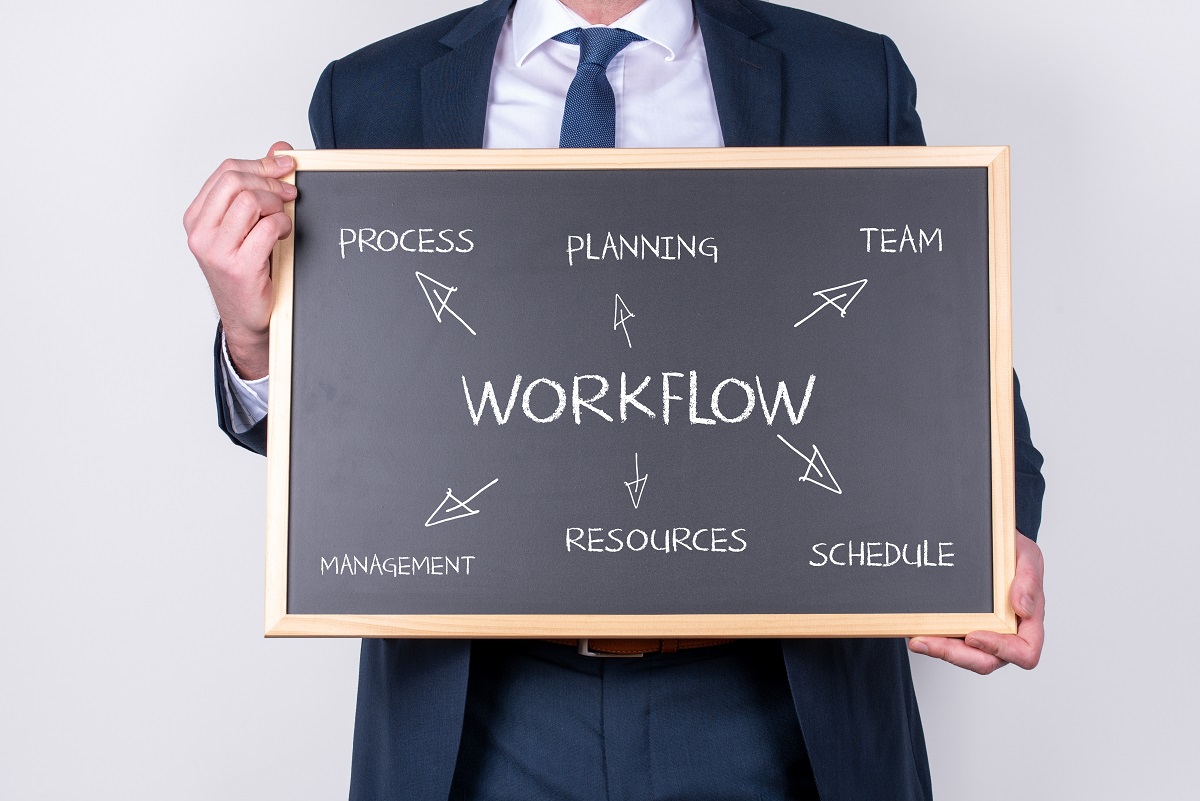
Instead of everything routing back to you, the business starts moving on its own.
Tasks don’t sit waiting for someone to notice them. They move to the next step because the process is already defined. Follow-ups don’t rely on memory. They happen because they’re built into the workflow. Updates don’t require you to check multiple places. They’re visible in one system.
Here’s what that shift looks like in practice:
Workflows move tasks forward instead of leaving them dependent on manual action.
Automation handles repeated steps so your time isn’t spent doing the same things over and over.
Visibility replaces guesswork, so you can see what’s happening without digging for it.
Your team knows the next step without needing constant direction.
Fewer things depend on you being involved for progress to continue.
This changes how your day feels.
You’re not constantly switching between tasks just to keep things moving. You’re not checking multiple tools to understand what’s happening. You’re not stepping into every situation just to make sure it doesn’t stall.
You start working on the business instead of holding it together.
And more importantly, things keep moving even when you’re not actively pushing them forward. That’s the real difference.
The work doesn’t disappear. It just stops relying on you to carry it.
The Shift Most Business Owners Never Make
Most business owners know something isn’t working, but the way they try to fix it keeps them stuck in the same place. They feel the pressure, they see the chaos, and they know things shouldn’t depend on them this much. But instead of changing how the business runs, they try to manage it better.

That’s where the problem starts.
When things feel messy, the natural reaction is to patch it. You add another tool. You create another checklist. You try a new way to stay organized. Each step feels productive, but it doesn’t actually change how the work moves inside the business.
So even though things look better on the surface, the pressure underneath stays the same.
Over time, this pattern becomes clear. You’re improving pieces of the business, but not the structure itself. You’re making tasks easier, but you’re still responsible for moving everything forward. You’re organizing information, but it still depends on you to act on it.
Here’s how that usually plays out:
You add tools, but they don’t connect, so you’re still managing between them
You improve individual tasks, but the overall process doesn’t change
You organize things better, but they still rely on you to move forward
You fix one issue, and another one takes its place
Because of that, the workload doesn’t actually go away. It just shifts from one place to another.
This is why the same problems keep coming back. Not because you’re doing something wrong, but because the structure underneath hasn’t changed. The business is still built in a way that depends on constant involvement to function.
The shift most business owners never make is moving from managing tasks to building systems that carry those tasks forward. That’s the difference between reacting all day and having work move without needing your attention at every step.
Until that shift happens, everything still comes back to you. And no matter how much you improve at managing it, you’re still the one holding it together.
Where to Start (Without Overcomplicating It)
Fixing this doesn’t start with rebuilding your entire business.
It starts by changing how you look at the work that already exists.
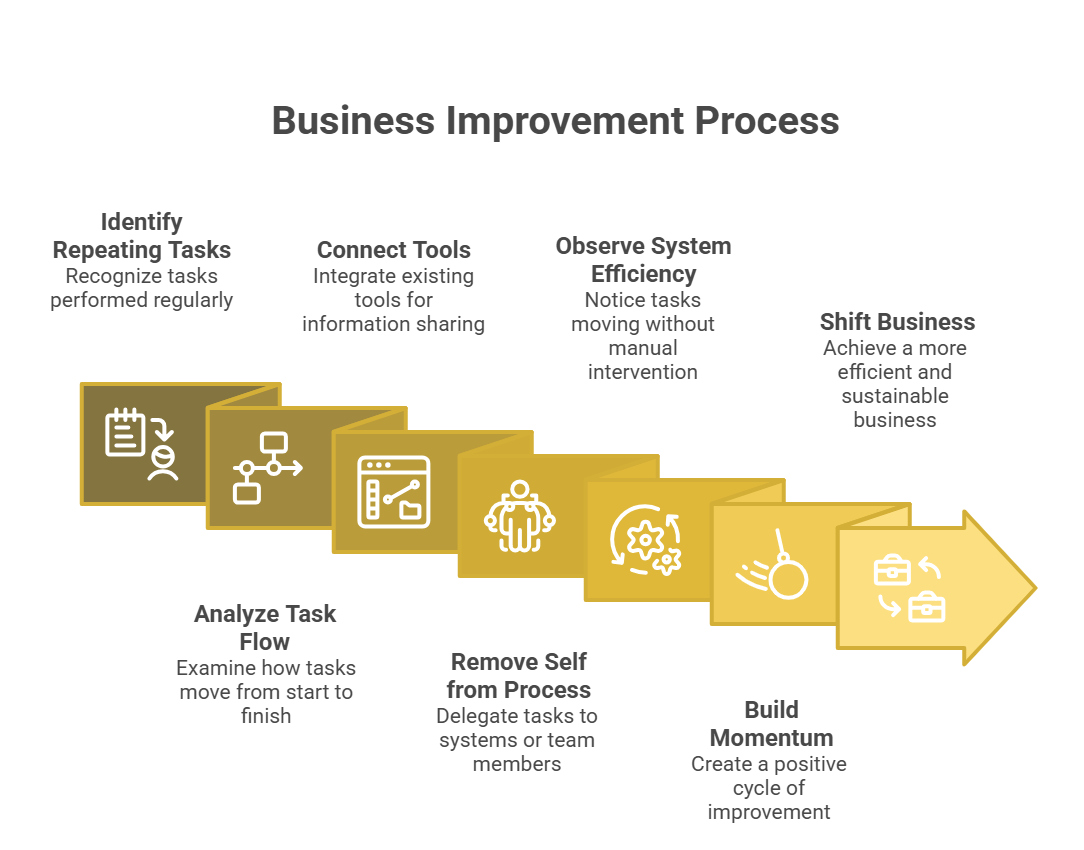
Most business owners overcomplicate this step. They think they need a full system, a complete setup, or a perfect structure before anything improves. That’s what keeps them stuck.
You don’t need that. You need to start small, but in the right direction.
Instead of trying to organize everything at once, you focus on the patterns that repeat. The work that shows up again and again. The tasks that always seem to come back to you.
That’s where the real opportunity is.
Here’s where to begin:
Identify the tasks you repeat every day or every week, especially the ones that require follow-up or checking
Look at how those tasks move from start to finish, not just what needs to be done
Connect the tools you already use so information doesn’t stay scattered
Remove yourself from the middle of the process wherever possible
This isn’t about doing less work. It’s about changing how the work moves so it doesn’t rely on you to keep it going.
At first, this might feel unfamiliar. You’re used to stepping in, fixing things, and keeping everything moving manually. Letting a system handle that requires a different approach.
But once you start, you’ll notice something quickly.
The same tasks that used to require your attention begin to move without you checking them. The same follow-ups that lived in your head start happening on their own. The same processes that felt unclear start becoming consistent.
That’s how you build momentum. Not by doing everything at once, but by starting with what already repeats and giving it structure.
Because once one part starts working without you, it becomes easier to fix the next.
And that’s how the business begins to shift.
What Happens When the System Is Right
When the system is right, the work doesn’t stop.
It just stops depending on you.
You’re still involved in the business. You’re still making decisions. But you’re no longer the one holding everything together behind the scenes. The pressure shifts because the responsibility is no longer sitting in your head.
Things start to feel different in a way that’s hard to explain at first.
You’re not checking as often.
You’re not stepping in as much.
You’re not trying to remember everything.
And nothing is falling apart because of it.
That’s the first real change. Then you start to notice something deeper. The business becomes more predictable. Tasks move the same way each time. Follow-ups happen without being chased. Your team knows what to do without waiting for direction.
Here’s what that looks like over time:
You have clear visibility into what’s happening without needing to search for it
You make decisions with confidence because the information is consistent
The business can handle more without everything slowing down
Your time is no longer spent managing details that should already be handled
This is where control comes back.
Not because you’re doing more, but because the business is structured in a way that supports you instead of depending on you. You’re no longer reacting to everything that shows up. You’re working from a place where things are already moving.
That’s what creates stability. And from there, growth becomes easier to handle.
Not because growth is simple, but because the foundation can support it.
See What This Looks Like in Practice
If this feels familiar, it’s not because you’re doing something wrong.
It’s because you’ve been carrying more than you should for too long.
The constant checking.
The follow-ups living in your head.
The feeling that everything depends on you to keep moving.
That doesn’t fix itself. And it doesn’t go away by working harder. It changes when the business is set up to run differently.
When the system handles what you’ve been holding together.
When tasks move without you pushing them.
When follow-ups happen without you remembering.
When your team knows what to do without waiting.
That’s what this looks like in practice. A business where the work is structured, connected, and moving without constant involvement.
If you’re tired of being the one holding everything together, the next step is seeing how that system actually works.
Take a look at how a structured system replaces this kind of chaos and gives you back control