
Sales & Revenue System
Stop Chasing Deals Just to Keep Revenue Moving
Growing your business shouldn't mean spending your entire day checking where every deal stands, chasing reps for updates, and jumping between tabs to move proposals forward. Kyrios gives your company one connected system that handles follow-ups, pipeline updates, and next steps automatically—so deals don't stall when you get busy.
Why Am I Still the One Checking Where Every Deal Is?
A proposal goes out. You assume someone followed up. Two days pass, and you find yourself asking the sales rep, "Did they get it?" Silence.
So you open your email inbox. You check text threads. You open the CRM tab. You ping the rep again. Finally, you throw up your hands and say, "I’ll just handle it myself."
It’s a Systems Breakage: nothing moves forward unless someone manually pushes it. And somehow, that someone keeps being you. Revenue shouldn’t stall just because follow-up sits trapped inside tools that can't act on their own.
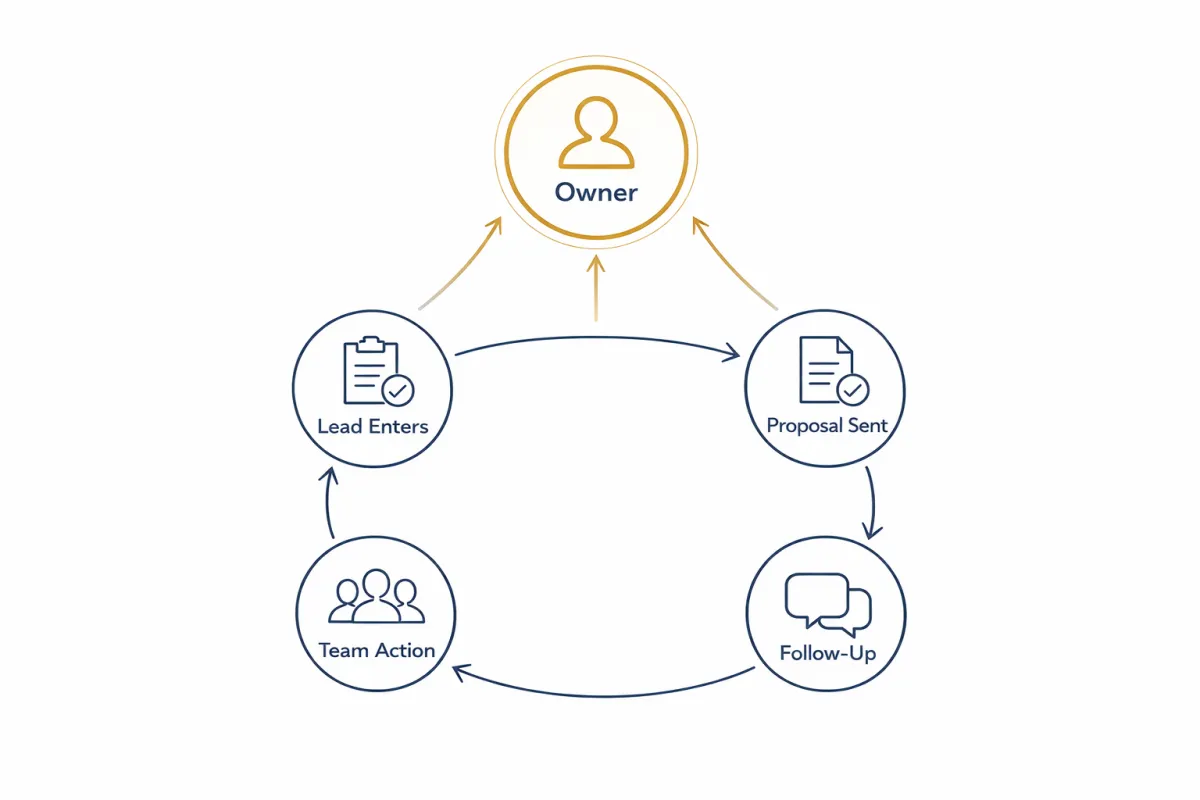
Sales pressure rarely shows up as one massive crash. It shows up in small gaps across disconnected tools and processes that keep piling up.
A lead fills out a form -> it sits in an inbox waiting for someone to manually assign it.
A proposal gets sent -> no automated reminder is set, so follow-up stops completely.
A prospect replies to a text -> the message lands somewhere while the deal sits somewhere else.
You ask, “Where are we with this deal?” Someone says, “I think we’re waiting on them.”
You check. You’re not waiting on them. They're waiting on you. You open three tabs to figure out what happened. The notes are incomplete, no task was created, and the pipeline wasn’t updated.
So you step in. Again...
You didn't build your company to be the sales manager, closer, and quality inspector for every deal. But when revenue feels unpredictable, you tighten your grip. That’s the loop: the more fragmented the tools, the more daily work lands right back on your plate.
Why Sales Issues Always End Up On Your Desk
Sales problems happen when the structure underneath it isn't right.
If a tool cannot assign the next step automatically, the responsibility defaults back to you.
If the pipeline doesn't update when a prospect replies, you have to ask people for updates.
If follow-up sequences don't run on their own, you have to prompt your team manually.
Approvals come to you. Pricing questions come to you. Deal strategy comes to you. Your team waits, you respond, and then the deal moves.
Without a clear system that advances opportunities automatically, progress depends on memory and chasing things down.
That’s why it keeps coming back to you. Not because your team can’t sell. Your current tools just don't keep it moving on their own.
What Sales Should Look Like
Revenue should move continuously without you needing to check every step:
When a lead comes in, it’s assigned immediately.
When a proposal goes out, follow-up is already running in the background.
When a prospect replies, the deal advances and the right person is notified.
You open your pipeline and see the exact status of every deal. No guessing, no chasing, and no "let me check."
Fewer interruptions, zero status meetings, and clear next steps for everyone on the team. You're leading your company—not pushing every single deal forward yourself.

How the Kyrios Sales & Revenue System Works
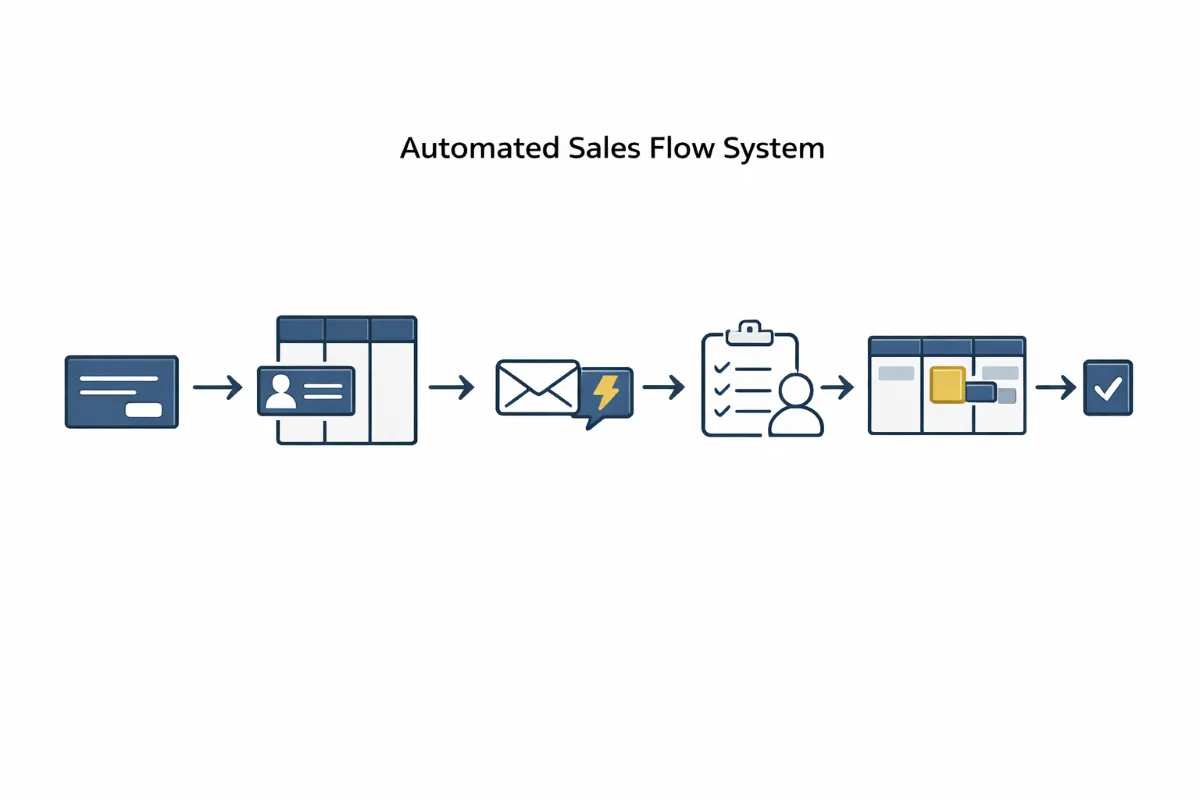
Inside Kyrios, when a prospect acts, the next step can already be set:
When an Inbound Lead Comes In
A contact record generates automatically.
The lead enters the correct pipeline stage.
An automated text or email follow-up sends instantly.
A follow-up task assigns to the right sales rep.
When a Deal Moves to "Proposal Sent"
An automated follow-up sequence schedules immediately.
Reminders trigger if the prospect hasn't opened the quote.
Internal notifications keep your sales team aligned.
When a Prospect Replies
The conversation logs directly to the contact record.
The pipeline stage updates automatically.
The assigned user is notified to take action.
When a Task Is Marked Complete
The opportunity advances to the next stage.
The next action is created automatically.
The system handles assigning, updating, scheduling, and tracking. You see progress clearly without having to chase down updates.
Kyrios Tools That Power This System
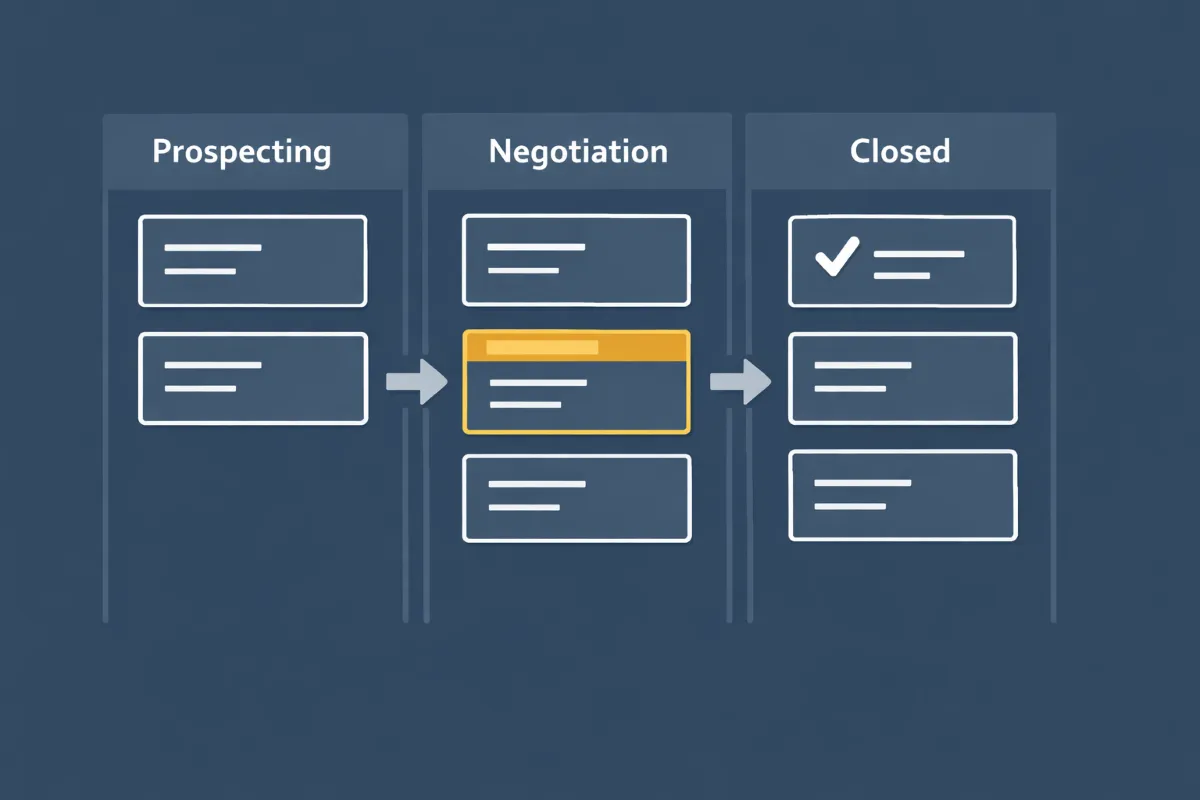
Pipelines, Opportunities & Project Management
This gives you one place to track deals, jobs, and next steps without wondering where anything stands. You can see what’s moving, what’s stalled, and what your team needs to do next to keep revenue from slowing down.
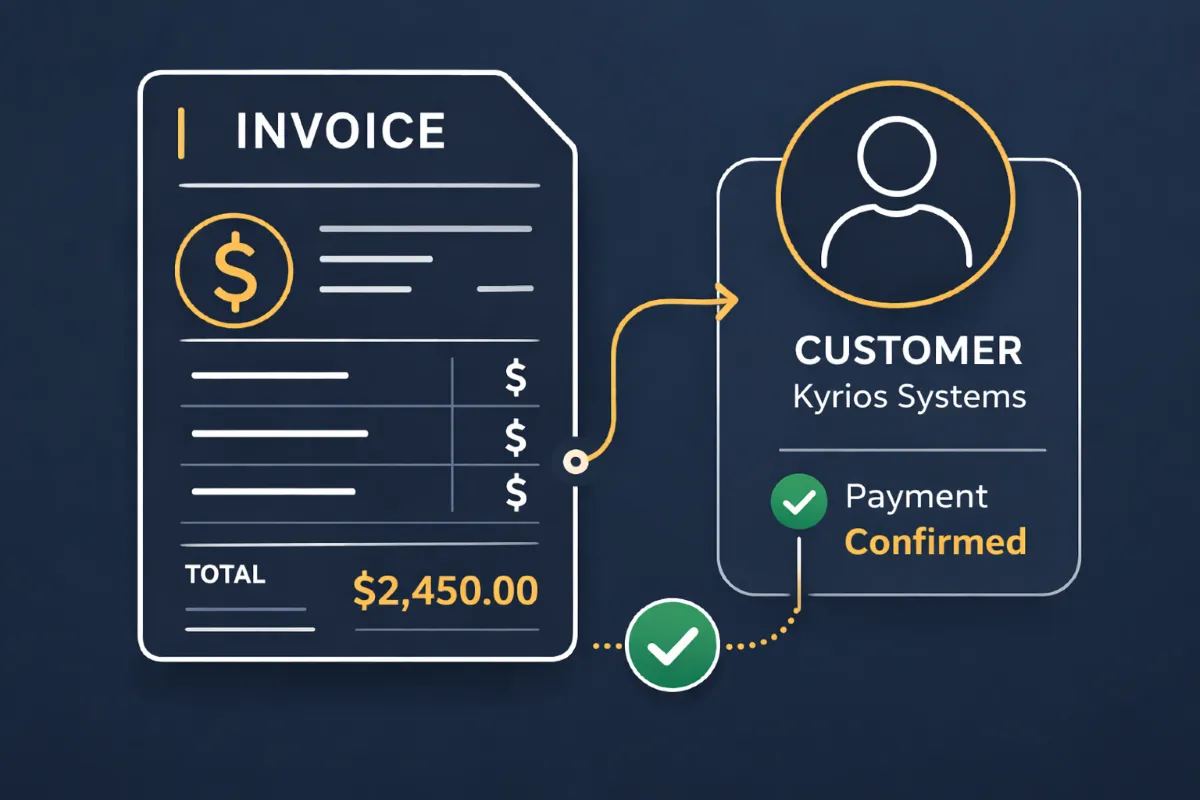
Invoicing & Estimates
You can send estimates, create invoices, and keep payment conversations tied to the actual customer record. That makes it easier to stay on top of money coming in without chasing paperwork across different tools.
e-Commerce
If you sell online, this gives you a direct way to manage products, orders, and customer activity inside the same system. You’re not trying to connect sales data from one platform and customer communication from another.

Affiliate Manager
This helps you track partners, referrals, and affiliate-driven sales without building a separate manual system for it. You can grow through partnerships while still keeping visibility on who’s driving revenue and what results they’re producing.
Website and Funnel Design Tools
Your website and funnels should do more than look good. They should help turn interest into real opportunities by capturing leads, guiding action, and feeding the sales process automatically.
Other Kyrios Tools That Support The Sales & Revenue System
Click any capability below to see how it connects into your sales system:
How This Connects to the Rest of Kyrios
Sales doesn't live on an island in Kyrios:
Deal Won: When a deal closes -> invoicing and onboarding workflows trigger automatically.
Meeting Booked: When an appointment is scheduled -> your team's calendars update instantly.
Task Completed: When a task moves -> the entire team gets clear visibility on progress.
Payment Collected: When revenue changes -> leadership dashboards reflect the update in real time.
This system works alongside the other Kyrios systems so communication, operations, and reporting stay aligned. Nothing updates in one place and stays stuck there.
When revenue moves, the business moves with it.
Ready to Stop Chasing Deals?
See how the Kyrios Business Operating System brings your conversations, sales pipelines, invoicing, and follow-ups into one connected place.
(205) 736-8422
1236 Blue Ridge Blvd,
Hoover, AL 35226

Company





1236 Blue Ridge Blvd, Hoover, AL 35226
Download the Kyrios app now